Mission Statement
Our mission is to twin St. Margaret Mary Parish in Hamilton, Ontario, Canada with St. Gabriel’s Parish in Beau-Séjour, Haiti. Filled with the gifts of the Holy Spirit, we offer support, growth and guidance with love and respect to our brothers and sisters in Haiti. We will do this through prayer, fellowship, education, and financial and material assistance.
We will also benefit from our relationship with our sister parish through the blessings that come from sharing our lives with the poor. Our call is to be disciples of the Lord Jesus Christ and be a beacon of light and hope for the world.
Background
The parish of St. Gabriel was founded in 1996 by Father Jean-Pierre Phillipe. It is situated 2,000 metres atop a mountain, southwest of Port-au-Prince, Haiti. Over 22,000 people live in this area and had extraordinarily little access to education, medical care, and other basic necessities. There is no road connecting St. Gabriel’s parish to any major city. At present, Beau-Séjour consists of a small rectory, the church, a schoolhouse, and a reconstructed medical building.
Since 2008, St. Margaret Mary Parish has been linked to St. Gabriel Parish in Haiti. This all began under the inspiration of Father Jean-Pierre Phillipe (who founded St. Gabriel Parish) and Father Bill Trusz (who was Pastor at St. Margaret Mary at that time). In 2003, Father Philippe came to Canada on a Sabbatical and was stationed at St. Margaret Mary Parish in Hamilton. Sharing some of the struggles that St. Gabriel’s was encountering many were inspired to try and do something to help out. In 2007, Father Philippe suggested a twinning of the two parishes to Father Bill Trusz. Father Bill and Father Philippe traveled to St. Gabriel’s Parish in August 2007, to meet with Father Ronal, then Pastor of St. Gabriel’s parish. Upon return, Father Bill produced a video of his trip, which was presented to parishioners of St. Margaret Mary with a proposal to establish a formal Twinning of the two parishes and was approved by Bishop Anthony Tonnos.
Over the years, Haiti has been struck with challenges of all kinds (earthquakes, tropical storms, poverty, civil and political violence, and a worldwide pandemic…) but our Twinning mission with our sisters and brothers of St. Gabriel Church in Beau-Séjour has helped them meet these challenges.
The initial focus of our fundraising was intended to help with the rebuilding of St. Gabriel Church and following the devastating earthquake in 2010 for emergency disaster relief. In 2012, Fr. Gaby Noel, facing the prospect of closing the schools due to the lack of funds to pay the teachers with an impact on the Catholic education of approximately 1,000 Haitian youth, gave St. Margaret Mary a clear path forward. Upon prayerful reflection, the Twinning committee recommended a change in our mission focus, to ensure the continuation of a Catholic education for the children and youth of St. Gabriel.
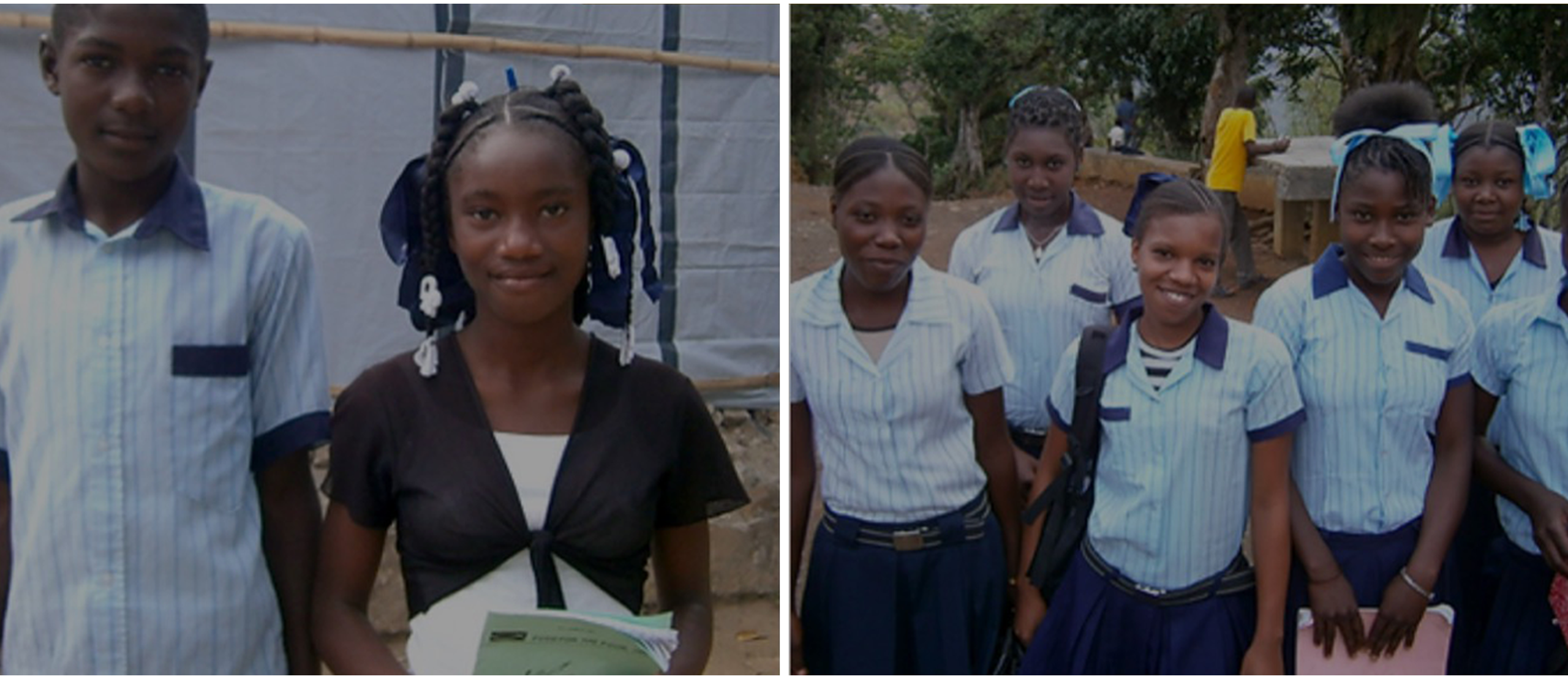
In 2023 we are nearing the completion of a bold 9 year financial commitment of providing $20,000.00 USD per year to support the salaries of the teachers, who have guided the formation and graduation of a generation of students in our Twinned parish of St. Gabriel in Beau-Séjour. One such graduate, Magdalena is a shining example of God’s grace as she upon graduation and certification as a nurse, has remained in the St. Gabriel community and is providing healthcare to the people in the Beau-Séjour region.
In August of 2021 we received notice of a change in the Pastor assignment at St. Gabriel and we expressed our gratitude and heartfelt thanks to Fr. Fernand for his faithful service to the community for the past 7 years. His passionate support for the Catholic education and formation of all children was a shining example of the importance of our mission and how in his words “Education elevates man to the dignity of his being.”
We welcomed Fr. Jude Efireille as the new Pastor of St . Gabriel and have communicated regularly and look forward to our continued journey in support of the Catholic education of over 800 students in 3 schools located in the Beau-Séjour region.
Following the completion of our current funding promise which concludes with the completion of the 2022-23 school year in June, the Parish Twinning Committee undertook a review and prayerful discernment regarding the future level of support in consideration of the new realities in a post pandemic environment. The presentation of a renewed four year commitment of $12,000.00 USD / annum was well received by the congregation at all masses on the weekend of March 11th and 12th, 2023 . This announcement also launched a renewed fundraising campaign and we are blessed by the continued support and great generosity of the St. Margaret Mary community.
We thank all those from our own parish and the many from other parishes in our diocese who have and continue to support this mission of hope and Catholic education in Haiti. Together we are making a difference in the lives of others and providing hope for a better future.
Facts about Haiti
- Haiti occupies one-third of the island of Hispaniola, sharing a border with the Dominican Republic.
- It is one of the most densely populated countries in the world. Brightness, cordiality, courtesy and hospitality characterize these people. They are also a very proud people. Work is rare in Haiti and 72% of the people live in the countryside, even though the majority don’t own the land they live on.
- Haiti means “High Country” which is well-suited. Four-fifths of the island is covered with mountains, reaching up to 2700 metres above sea-level.
- It is a country of extremes, with dry, desert-like regions and rainy, tropical areas.
- It has suffered severe ecological damage due to deforestation, resulting in mudslides and restrictions on drinkable water.
- Haiti lies in the middle of the hurricane belt and is subjected to severe storms and flooding from June to October. The last major hurricane was Hurricane Georges in 1998, causing flash floods, and mudslides that took the lives of many people. It is estimated that over 160,000 people were left homeless after Hurricane Georges.
- Haiti is the poorest country in the Western Hemisphere with 80% of the population living under the poverty line, and 54% living in abject poverty. Two-thirds of all Haitians depend on the agricultural sector, mainly small-scale farming, which is vulnerable to the climate and natural disasters.
- Its economy has many problems due to a long history of corruption and violent government officials. Since 2004, about 8,000 peacekeepers from the United Nations maintain civil order. Haiti depends greatly on foreign aid from countries such as Canada and the United States, its biggest trading partners.
- Most Haitians speak Creole, a language that is a combination of African and French.
- For Haiti’s lower class, living conditions are often worse than in rural areas. There is no access to health care, proper sanitation or safe affordable drinking water; however, the parents make a concerted effort to keep their children in school, knowing this is the only way to a better life.
- Haiti lacks a proper health care system. For this reason, many Haitian suffer from illnesses that are preventable.
- Haitian parents consider children gifts from God. Parents work hard provide for them, and ensure a good education. In return, when children grow up, they care for their aging parents.
- 80% of Haitians are Roman Catholic and 16% belong to Protestant churches. Along with their primary religious practices, most Haitians also practice some aspects of the voodoo religion. Voodoo has its roots in African beliefs, focusing on family spirits who help and protect.
- One of Haiti’s largest problems is its 53% illiteracy rate and since people are so poor, they cannot afford schools, teachers, supplies, etc. In rural areas, local churches provide the only opportunity for education.
- The main food consumed in Haiti is cassava, millet and rice and numerous varieties of fruit. Considering that the average yearly income is barely $350.00, the people rarely have the opportunity to eat meat, fish or eggs. Malnutrition in the countryside is especially high. Malaria, tuberculosis, and hepatitis are of epidemic proportions. Families of up to 10 children often live in clay huts with thatched roofs. Often these miserable huts don’t belong to them and they can be evicted if they don’t pay their rent.
- Life Expectancy: males is 55 years, females is 59 years.